Avery Patterson · 11 September 2026
Drought Forces Fellstone Businesses to Prioritize Nearby Produce in Menu Changes
Prolonged dry conditions across Fellstone have reduced yields for several staple crops, prompting cafes and high street outlets to revise their offerings around ingredients sourced from closer suppliers. Records from local monitoring stations show rainfall totals well below seasonal averages through the spring and summer of 2026, with the driest stretch occurring between May and August. Growers report lower volumes of potatoes, leafy greens, and soft fruits, while grain harvests face similar shortfalls that affect bakery suppliers.
Effects on Regional Agriculture
Farmers in surrounding areas note that soil moisture levels dropped sharply after an unusually warm April, leaving root systems vulnerable during critical growth phases. Irrigation systems have run at capacity, yet many fields still show patchy development. Data from the Met Office indicates the region received roughly 40 percent less precipitation than the five-year average, a pattern that aligns with broader trends tracked by the European Environment Agency across parts of northern Europe. Livestock operations have also felt the pinch as pasture growth slowed, increasing demand for supplemental feed that competes with human food supplies.
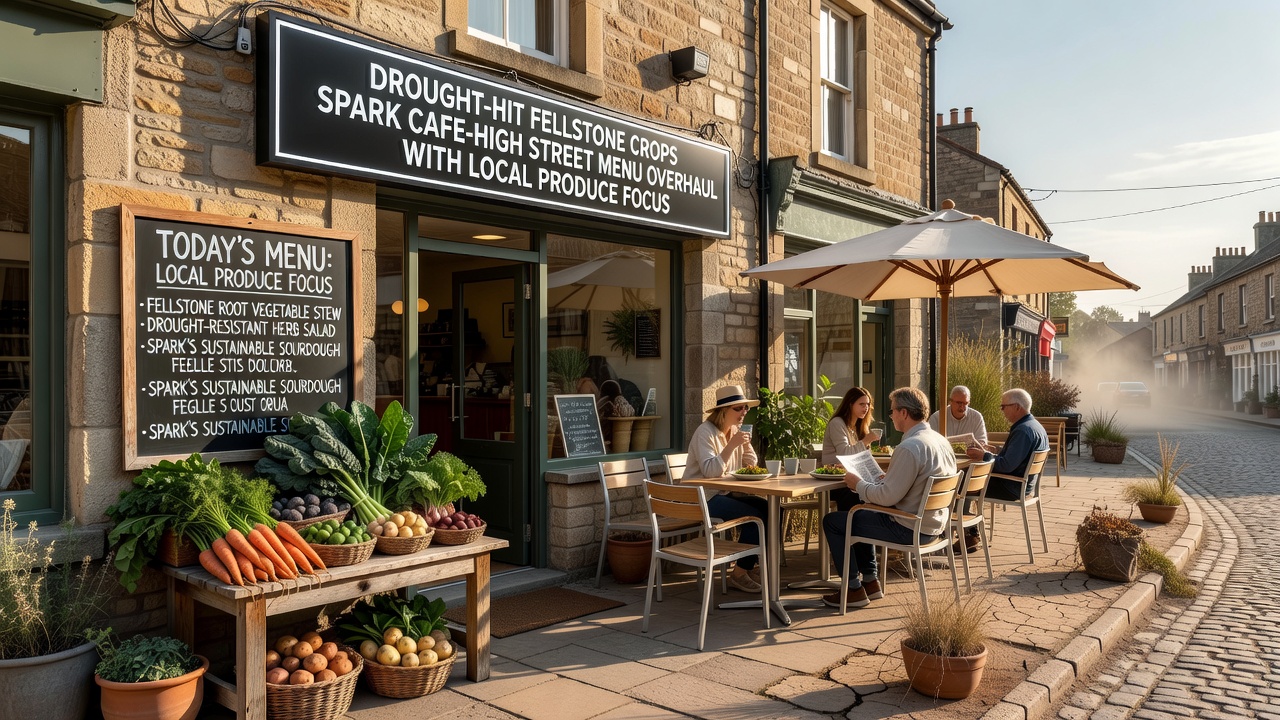
These agricultural pressures reached high street kitchens by early September 2026, when several cafes announced they would scale back dishes reliant on imported or distant produce. Instead, menus now highlight items such as locally grown herbs, free-range eggs from nearby farms, and seasonal vegetables obtained through short supply chains. One establishment replaced its standard salad mix with a blend featuring kale and radicchio from two holdings less than five miles away, while another shifted its daily soup rotation to feature root vegetables stored from earlier plantings that survived the dry spell better than expected.
Adaptations Among High Street Outlets
Business owners describe the adjustments as practical responses to availability rather than stylistic choices. Delivery schedules have been tightened to match harvest windows, and some kitchens now coordinate directly with growers on planting schedules for the coming season. A bakery on the high street reduced its bread varieties after wheat deliveries from regional mills dropped, focusing instead on spelt and rye loaves made with grain sourced from two farms that maintain older, drought-tolerant cultivars. Coffee shops report experimenting with oat and almond alternatives that do not depend on the same water-intensive crops affected locally.
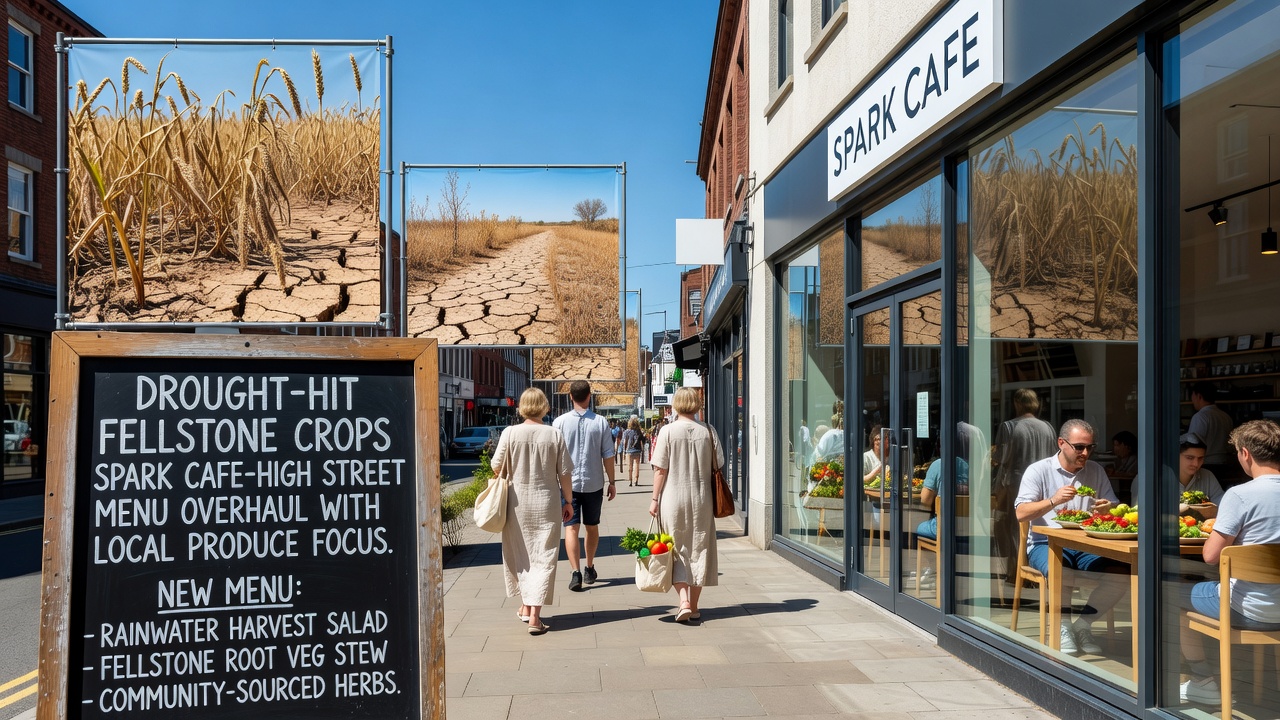
Inventory tracking shows that establishments maintaining relationships with multiple small producers experienced fewer disruptions than those relying on single large distributors. One cafe introduced a rotating “field-to-plate” special each weekday, listing the exact farm and harvest date on the chalkboard. Another partnered with a nearby apiary to incorporate honey into dressings and baked goods, offsetting the reduced supply of certain fruits previously used for preserves. These shifts have required staff retraining on new preparation techniques and updated supplier contracts that emphasize quality verification at the point of collection.
Supply Chain Adjustments and Community Links
Market data compiled by regional trade groups reveals an uptick in direct farm-to-business sales since June 2026. Wholesalers note that orders for out-of-area lettuces declined while requests for preserved and pickled local items rose. Transport costs have fallen for some operators because shorter routes reduce fuel use, though cold-storage needs remain steady for perishable goods. Community-supported agriculture boxes have gained subscribers among kitchen managers seeking predictable weekly deliveries of whatever survives the dry conditions best.
Researchers at agricultural colleges have begun sharing soil-management techniques suited to lower rainfall, including cover cropping and mulching methods already tested in drier climates. Observers note that Fellstone’s experience mirrors patterns documented in reports from the Australian Bureau of Meteorology, where similar multi-year dry periods prompted comparable menu pivots in rural hospitality sectors. Local councils have facilitated networking events between growers and restaurateurs to streamline matching of available produce with kitchen requirements.
Looking Ahead
Planting decisions for autumn and winter crops now incorporate drought-resistant varieties recommended by extension services. Some cafes plan to extend their current sourcing model into the off-season by featuring preserved and fermented products made from summer surpluses. Monitoring stations continue to track reservoir levels and groundwater recharge rates, providing weekly updates that inform both farmers and food-service planners.
Conclusion
The combination of reduced regional harvests and responsive menu planning has reshaped daily operations for Fellstone’s high street food outlets. Establishments that maintain flexible supplier networks and emphasize nearby produce continue to serve customers while adapting to the constraints imposed by the ongoing dry period. Ongoing coordination between growers, distributors, and kitchens will determine how these changes evolve as weather patterns shift into the final months of 2026.